Keep your boiler clear, your pressure steady, your coffee honest
Cafetto coffee machine descalers, chosen by the people who supply the parts scale destroys
TL;DR: A coffee machine descaler is an acid-based cleaner that dissolves limescale inside boilers, water lines and kettles. Cafetto Renew, Spectra and LOD Green are the organic-certified options stocked here.
Scale is the quiet failure. It builds inside the boiler where you cannot see it, then one morning the steam wand goes weak and the pump starts to strain. We know because we sell the heating elements and pressure parts that scale kills, and we have done since 1999. This page covers the Cafetto descaling range: Renew sachets and powder, Spectra powder with its colour indicator, and LOD Green liquid. Here is how to choose, and how to use them.
Cafetto's own technical literature spells out what a scaled boiler looks like from the outside: lack of pressure, a steam wand that stops performing, hot water that will not drain, tainted taste, and eventually a service call. A scale-free boiler builds pressure, steams well and drains cleanly. That list matches what our workshop sees on the bench every week.
Why we stock Cafetto for descaling
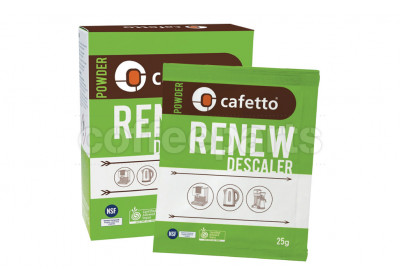
Cafetto Renew is NSF listed, which means the formulation has been tested against toxicology and corrosivity standards and is rated safe on aluminium, brass and stainless steel. It is registered with Australian Certified Organic, phosphate free and rapidly biodegradable. Each 25g sachet makes up one litre of solution, so dosing is never a guess. The larger Cafetto 2kg Renew tub suits technicians and cafés that descale often.
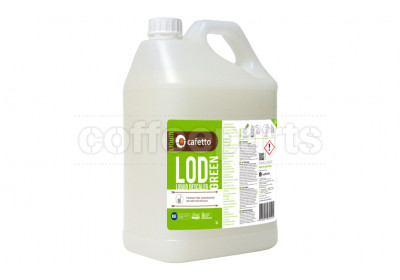
Cafetto Spectra adds a colour indicator so you can see when the solution has done its job. Cafetto LOD Green is the liquid option, built on a blend of four nature-derived acids and also NSF listed and ACO registered. Between the three you cover thermoblock home machines, boiler machines, batch brewers, kettles, urns and bain-maries.
There is a family reason too. My dad convinced Chris Short to turn his family's South Australian cleaning business into a coffee-specific one. That company became Cafetto, and we have stocked it from the beginning. For everything else in the cleaning cupboard, see our cleaning chemicals range.
Powder, sachet or liquid?
Start with how often you descale and how much equipment you look after. A single home machine is well served by the Cafetto Renew 25g sachets, sold individually or as a six-pack. One sachet, one litre of warm water, done. If you run several machines, or you are a technician, the 2kg Renew tub and the 5 litre LOD Green bottle bring the cost per descale down and remove the packaging waste.
Spectra is the choice if you want visual confirmation. Its indicator changes colour as the solution works, which takes the guesswork out of deciding whether one pass was enough. That matters on a machine that has not been descaled in a long time.
Breville, Delonghi or Nespresso: which Cafetto product?
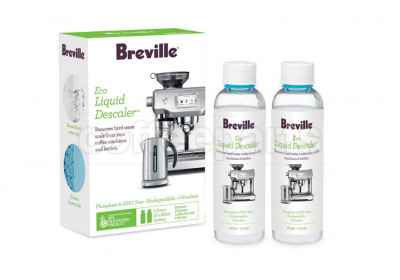
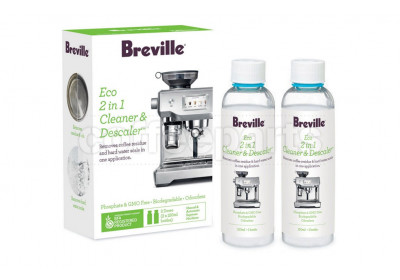
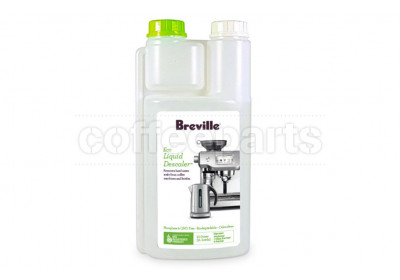
This is the question we get most, so here is the honest steer. Breville branded descaler and Cafetto come out of the same maker; Breville's version is Cafetto with different packaging, so buying the Cafetto range directly gets you the same chemistry at better value. Renew is designed for espresso machines, boilers and coffee brewers, and it is safe on aluminium, brass and stainless steel, which covers the metals inside a Breville thermoblock. Always follow the descale prompt and procedure in your machine's manual. If you arrived here looking for a Delonghi descaler or a Nespresso descaling solution, the same logic applies: Renew is designed for espresso machines, boilers and coffee brewers, so check the descaling procedure in your manual before running any third-party product through a capsule machine, and ask us if you are unsure. If you own a Breville, our Breville range page lists the accessories and consumables built around them.
How to descale an espresso machine with Renew
Cafetto's method for a tank machine is simple. Dissolve one sachet in a litre of warm water and pour it into the tank. Remove the portafilter and turn the machine on. Run about a cup of solution through the brew head and roughly a quarter cup through the steam wand, then let it stand for fifteen minutes and repeat until the tank is empty. Fully automatic machines run everything through the hot water function, not steam. Finish by flushing a full tank of fresh water through both the group and the wand. Rinse properly; residual acid is what people taste when they complain a machine 'went sour' after descaling.
Descaling is the cure. Filtration is the prevention.
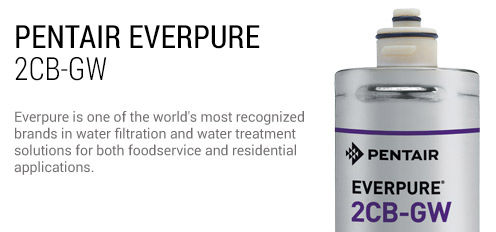
A descaler removes what has already formed. It does not stop the next layer. If you are descaling every few weeks, the water going in is the real problem, and a water filter matched to your supply will do more for the machine than any bottle on this page. Not sure what your water is doing? Our water testing options tell you before you guess. And when scale has already claimed a part, our maintenance and rebuild kits are the next stop.
Cafetto started because my dad talked Chris Short into making cleaners for coffee instead of everything else. Chris is still a family friend, and Renew has earned its place on our shelves for a plainer reason: it works and it has never corroded a boiler we have seen. My advice is the unglamorous kind. Descale on a schedule, not when the steam wand dies. Rinse twice as long as you think you need to. And put a filter on the machine you care about, because the best descale is the one you never have to do.
— Pedro Lara
Frequently Asked Questions
What is a descaler?
+
A descaler is an acid-based cleaning product that dissolves limescale and calcium deposits left behind when hard water is heated. In a coffee machine, that build-up sits inside the boiler, thermoblock, water lines and steam wand where you cannot see it. Cafetto's descalers use blends of organic acids, and Renew and LOD Green are NSF listed, meaning they have been tested for corrosivity and safe residue on machine metals.
Can I use vinegar instead of a coffee machine descaler?
+
We do not recommend it. Vinegar is not formulated or tested for the metals and seals inside an espresso machine, it lingers in the taste, and most manufacturers' manuals specify a proper descaling solution. Cafetto Renew is tested safe on aluminium, brass and stainless steel and leaves no harmful residue when rinsed. A 25g sachet costs little against the parts that scale or corrosion can damage.
How often should I descale my espresso machine?
+
It depends on your water hardness and how much you brew. Cafetto's guidance is that frequent use of a mild organic descaler keeps scale from ever getting heavy. Many home machines prompt you when a descale is due; follow that. If you find yourself descaling very often, the answer is a water filter on the inlet, not more descaler.
Which Cafetto product suits Breville home espresso?
+
Cafetto Renew. Breville's own descaler is Cafetto product in Breville packaging, so the Cafetto range gives you the same chemistry at better value. Renew is designed for espresso machines, boilers and coffee brewers and is safe on the aluminium, brass and stainless steel used in home machines. Follow the descale procedure in your Breville manual, and rinse a full tank of fresh water through afterwards.
What are the signs my boiler has scale in it?
+
Cafetto's technical guide lists the symptoms: a lack of pressure, a steam wand that no longer performs, hot water that will not drain, and a tainted taste in the cup. Left alone, the next stage is a service call. If you notice any of these, descale now with Renew or Spectra and consider water filtration so it does not return.
Is Cafetto Renew safe on aluminium and brass?
+
Yes. Renew is NSF listed, which means the formulation has passed toxicology and corrosivity testing, and Cafetto rates it safe for aluminium, brass and stainless steel. It is also registered with Australian Certified Organic, phosphate free and rapidly biodegradable. Rinse thoroughly with fresh water after every descale, as Cafetto's instructions require.
Does a water filter mean I never need to descale?
+
A properly matched filter reduces scale formation dramatically, which is why we push filtration harder than any descaler. Whether it removes the need entirely depends on your local water and the filter you choose. Our approach is both: filter the water going in, and keep a few Renew sachets on hand for the periodic descale your manufacturer still recommends.