



First time here?
Not a Coffee Parts Wholesaler yet?
Want to be a Coffee Parts Wholesaler??




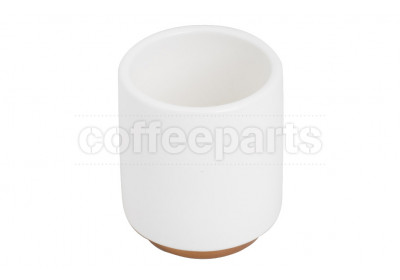
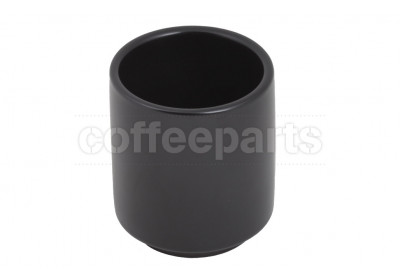
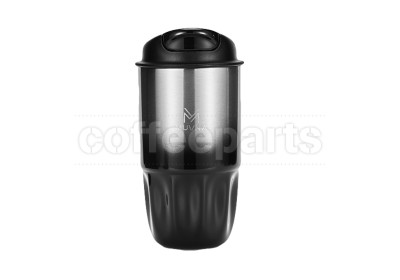
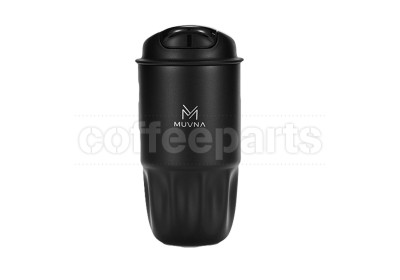



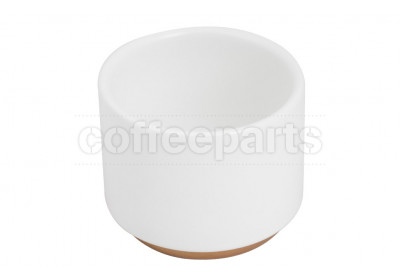
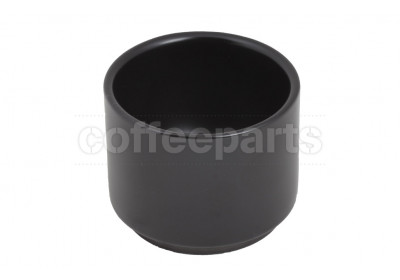
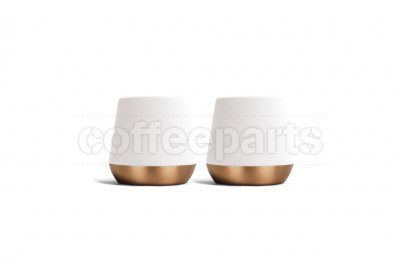
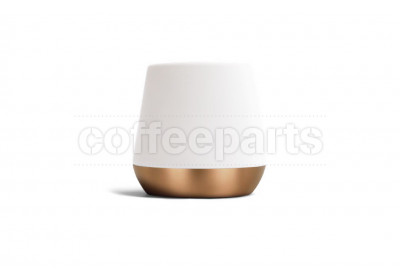


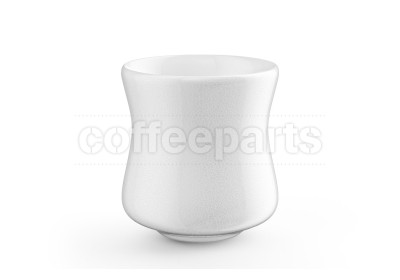
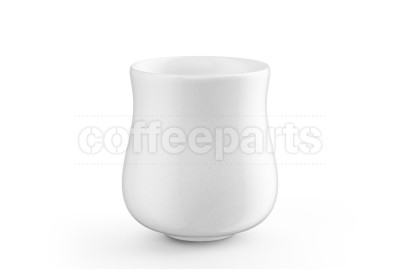
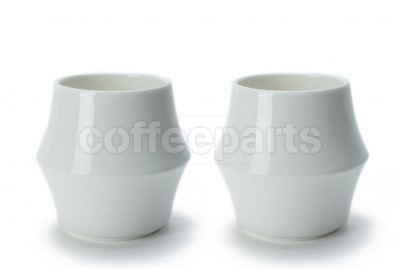
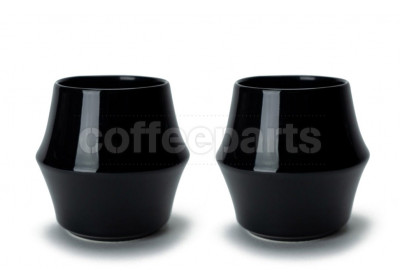
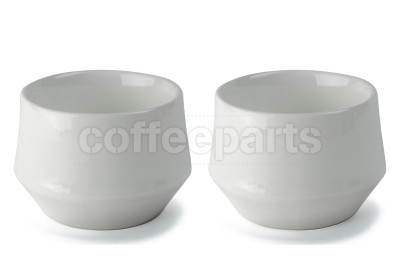

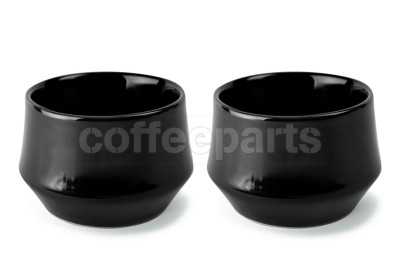

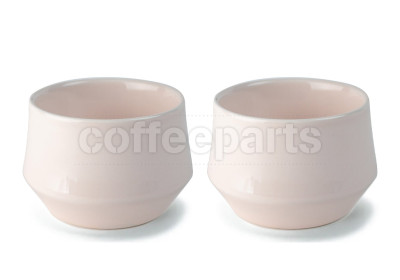
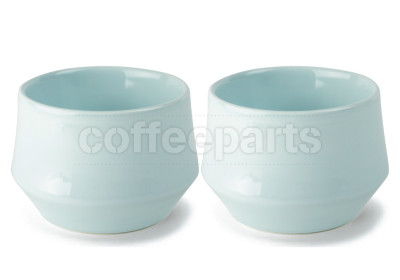
Espresso cups, latte glasses and specialty mugs chosen for how coffee actually tastes
TL;DR: Coffee cups and glassware are the vessels for espresso, milk drinks and filter coffee. The MHW-3Bomber DW Glass V-Shaped 130ml suits cortados; Rocket Espresso 180ml cups suit flat whites.
Everything upstream of the cup lands here. Wall thickness affects heat retention, rim profile changes how liquid spreads on the palate, and volume decides whether the espresso-to-milk Ratio holds. Our coffee cups and glassware range covers espresso, cortado, flat white, latte and cold brew, in sizes between 75ml and 530ml, from Kruve, MHW-3Bomber, Fellow, Origami, Rocket Espresso and Ni Wares. We have been sourcing and testing since 1999. Start with the drink you serve most, and the choice narrows fast.
Wine and spirits people have known for a long time that the vessel is not neutral, and coffee follows the same physics. Michelman and Carlsen make the point in The New Rules of Coffee: taste is a fusion of flavour, smell and touch, so the vessel you drink from really does change what you perceive. Kruve applies this directly. Its EXCITE glass uses a bulbous shape and large liquid surface to soften acidity and lift sweetness, while the narrow INSPIRE glass funnels aroma and sharpens acidity. Same coffee, two results.
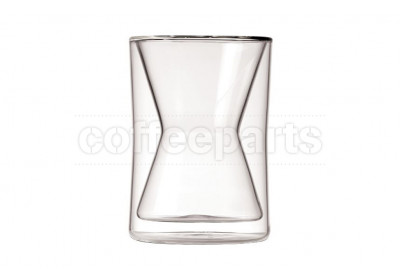
Volume is not arbitrary. A single shot is small, so the Kruve Propel at 75ml and the Rocket Espresso 80ml Demitasse leave headspace for crema without the shot looking lost. A cortado sits happily in the 130ml MHW-3Bomber DW Glass V-Shaped, whose outward-flaring rim is designed to open up aroma and aftertaste. Flat whites and cappuccinos land between 180ml and 200ml, which is where the Rocket Espresso 180ml cups and the Fellow Pirch Cappuccino 192ml sit. Thick ceramic, such as the MHW-3Bomber Swirl Cup fired at 1300°C, holds heat and gives a stable sip. Double wall glass keeps the exterior comfortable and the liquid warm for longer. Every piece here has been tested on our own bench, and each has earned its place. Browse specialty coffee cups for the sensory-focused pieces and dine-in cups and glasses for service volumes.
Start with the drink, not the aesthetic. Match the vessel to what you pour most and the design question mostly answers itself.
A single or double shot wants a small, thick-walled vessel that protects temperature and holds crema. The Rocket Espresso 80ml Demitasse comes as a set of six with saucers, made in Italy for Rocket Espresso, and suits a bench that pulls shots back to back. The Kruve Propel espresso glass at 75ml is hand-blown and sold in pairs; the Dark Series version in smoked glass is the same shape in a moodier finish. Huskee's natural espresso cups at 88ml are made with coffee husk and hold heat well.
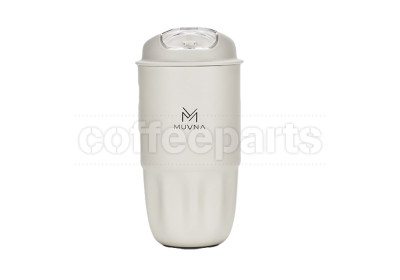
This is the most Ratio-sensitive format. Too large and the milk feels thin; too small and the espresso dominates. The MHW-3Bomber DW Glass V-Shaped 130ml is a double wall coffee glass built for exactly this window, and the Kruve Imagine Cortado at 150ml keeps a consistent surface area for latte art. If you prefer ceramic, the MHW-3Bomber Swirl Cup at 150ml and the Zerohero Hammered Cup 150ml both work. The Muvna Tivat Glass at 100ml and 160ml is a lead-free machine-made cortado glass in the Melody Rainbow finish.
The flat white is an Australian original: a double espresso with milk and a light layer of velvety foam. The Rocket Espresso 180ml Flat White cups, six with saucers, are the traditional ceramic answer. The Fellow Pirch Cappuccino 192ml pair uses single-wall soda lime glass with a fine drinking lip and a curved interior that helps milk integrate. The Ni Wares Kiki 200ml and Zerohero Hammered Cup 200ml sit in the same band, and the MHW-3Bomber Cera Series 240ml ceramic cup is designed for milk-based espresso drinks with a bit more length.
The Kruve Imagine Latte at 250ml, in porcelain or smoked glass, has a spherical inner shape optimised for latte art. The iKape 270ml glass coffee cup is a plain, tough daily driver. For cold formats, the MHW-3Bomber Ice Cool Portable Cold Brew 530ml Cup is a Tritan tumbler that fits a car cup holder, and it is our pick for a glass for iced coffee alternative that will not break in a bag. Pair it with the cold brew range.
Ceramic holds heat better and tolerates daily bench use. Glass suits filter coffee and cold brew, where colour tells you something about extraction. The Origami Pino Flavour Cup is ceramic, crafted in Mino, Japan, shaped like a wine glass and handle-free so you cup it in both hands. For travel, the Huskee Steel Cup with Lid 8oz is vacuum-insulated recycled stainless; see also reusable coffee cups.
Service ware needs to survive the dishwasher and a busy pass. The Rocket Espresso sets and the MHW-3Bomber Cera cups are the practical starting points; browse dine-in cups and glasses for the wider commercial selection.
MHW-3Bomber is the Gold Sponsor of the 2025 World Barista Championship in Milan, and Coffee Parts is its exclusive distributor in Australia. The same brand seen on the competition stage supplies the DW Glass, Swirl, Cera and Ice Cool cups in this range, available here directly. Browse the full MHW-3Bomber range.
The cup is where the coffee lands, but what fills it matters just as much. For milk drinks, pair your cups with a milk jug sized to the drink you make most and a thermometer so steaming stays consistent from one cup to the next. If you dial in by eye, a shot glass makes the espresso volume visible before it meets the milk. For filter coffee, glassware works alongside the manual brewing range, and cold formats sit naturally with the cold brew gear. None of this is upsell. It is the short list of things that make the cup you chose deliver what it was designed for.
A cup is the last decision in a long chain of good ones. We have watched people spend seriously on a grinder and a machine and then serve the result in whatever was in the cupboard. Hoffmann is right that the cup you love the heft of is the right cup for you, and I would only add one thing: love it for a reason. The brands in this range take geometry, material and weight in hand seriously. We have been doing this since 1999, and we would not stock a cup we would not drink from ourselves.
— Pedro Lara
Most Australian cafes serve flat whites and cappuccinos in ceramic cups around 180ml to 200ml, with a saucer, and lattes in glass around 250ml. Ceramic survives dishwasher cycles and holds heat; glass shows the layers. The Rocket Espresso 180ml cups (made in Italy for Rocket Espresso, set of six with saucers) and the MHW-3Bomber Cera Series 240ml are the service-ware starting points in this range.
A traditional cappuccino is roughly 40ml of espresso with about 120ml of milk and a foam layer at least 1cm thick, so a cup between 160ml and 200ml is standard. The Fellow Pirch Cappuccino glasses are sized at 192ml for exactly this drink. Larger 'cappuccino' cups in the 300ml range are really latte cups.
Twelve fluid ounces is about 355ml. That is a long latte or a batch-brew serve rather than a flat white, which is why a 12 oz cup makes a milk drink taste thin unless you add a second double shot. In this range the Ni Wares Bouba at 400ml and the MHW-3Bomber Ice Cool 530ml tumbler cover the larger formats.
Insulated construction matters more than material for cold drinks: it slows warming and stops condensation on the outside. The MHW-3Bomber Ice Cool Portable Cold Brew 530ml Cup is made of BPA-free Tritan, fits a car cup holder and is built for cold formats. Double wall borosilicate also works well if you want to watch the colour as ice melts.
For a shot you drink in a minute, the thermal benefit is modest, but the comfortable exterior and the view of the crema settling are real. The MHW-3Bomber DW Glass V-Shaped 130ml adds an outward-flaring rim designed to lift aroma and aftertaste, which is the stronger reason to choose it. For longer drinks like filter coffee, double wall glass pays off clearly.
Traditionally yes. A flat white is a double espresso with milk and a light layer of velvety foam, and a thick ceramic cup of 180ml to 200ml holds heat through the drink and keeps the Ratio right. Glass is not wrong; the iKape 270ml lets you check milk integration, but it sits at the long end and reads as a small latte.
Demitasse means 'half cup' and is the cafe name for the small espresso cup, typically 60ml to 90ml, leaving headspace for crema. The Rocket Espresso 80ml Demitasse set and the Kruve Propel 75ml glasses are both demitasse-format vessels. Cortado and piccolo glasses are the next size up, around 100ml to 150ml.