Every shot begins in the basket, so choose it well
Precision portafilter baskets from VST, IMS, Pesado, Pullman and MHW-3Bomber, in Australian stock since 1999
TL;DR: A portafilter basket is the perforated filter holding ground coffee in an espresso portafilter. Precision models like the VST 18g and IMS B70 use uniform holes for even extraction.
A portafilter basket looks like the simplest part of an espresso machine, yet the shape and consistency of its holes decide whether your grinder gets a fair hearing. This range covers coffee filter baskets for mostly 58mm portafilters in single, double and triple capacities, from standard replacements to precision designs by VST, IMS, Pesado and Pullman. Below you'll find how baskets change extraction, how to size one to your dose, and what to pair it with.
Why the holes matter more than the metal
Ground coffee looks uniform to the eye, but under magnification the particles vary widely in size. The smaller ones pass through the basket into the cup; the larger ones lodge in the holes. A few blocked holes barely register. Enough of them, and flow slows in that patch of the puck, the coffee there under-extracts, and the shot tastes thinner than the grind deserves. We know this from the bench: two baskets that look identical can pour very differently from the same dose.
That is the case for precision. In Espresso Extraction: Measurement and Mastery, Scott Rao notes that most conventional baskets have mechanically punched holes, which leaves misshapen holes and inconsistent flow rates, and he recommends baskets with precise, laser-cut holes verified by imaging. The precision baskets here are built on that idea. VST filters are warranted for zero defects and designed to brew a Normale, Ristretto or Lungo properly within a narrow gram range. Pullman baskets are hand measured to a 58.70mm internal diameter, with holes held to 0.3mm plus or minus 0.02mm. The MHW-3Bomber JusBean 18g uses more than 1800 holes in a concentric pattern. We have tested them on our own machines before putting them on the shelf.
If your basket is cracked, warped or missing rather than underperforming, start with our replacement filter baskets matched by machine, where fit comes before extraction talk.
How to choose a portafilter basket
Three questions settle most choices.
What diameter is your portafilter?
Measure the inside of the basket you already own before you buy anything. 58mm is the most common commercial and prosumer standard and is what the bulk of this range is built for, with 57mm and 53mm baskets also made. If your machine takes a different diameter, a 58mm espresso basket will not seat, however good its holes are. Searching for a Breville filter basket or a 54mm portafilter basket? Check the diameter first, then look at our Breville Barista Express accessories for model-matched gear.
How much coffee do you dose?
Baskets are labelled by gram capacity. Singles usually run 7g to 14g, doubles 14g to 21g, triples above 21g. Pick the basket that matches the dose you actually weigh, because a precision filter is designed to perform within a narrow range: a VST basket, for instance, comes in 15g, 18g, 20g and 22g versions, each meant for a dose near its label. At a 1:2 brew ratio, an 18g dose yields roughly 36g in the cup, and a 20g dose about 40g.
Standard or precision?
A standard basket is the honest choice when you need a like-for-like part that fits and pours reliably. A precision basket earns its place once your grinder and dose are already dialled in and you want the remaining inconsistency out of the picture. Here is how the precision brands on this page differ:
- VST: ridged and ridgeless 15g, 18g, 20g and 22g filters, warranted for zero defects, aimed at uniform extraction across every group on a multi-group machine.
- IMS Competition (B70 series): 7/9g single, 16/20g and 18/22g doubles for 58mm groups, with a long published list of compatible brands from La Marzocco to Rancilio.
- Pullman: ridgeless 17-19g, 19-22g and 22-25g baskets, hand measured to a 58.70mm internal diameter to suit the Pullman Big Step tamper.
- Pesado: EP precision filters in 18g and 22g optimised for medium to dark roasts, plus the HE[%] High Extraction range in 15-17g, 17-19g, 19-21g and 21-22g sizes.
- MHW-3Bomber: the 15g BEP Butterfly with a straight-sided, flat-bottom profile and dual-layer filtration, and the 18g JusBean with more than 1800 holes.
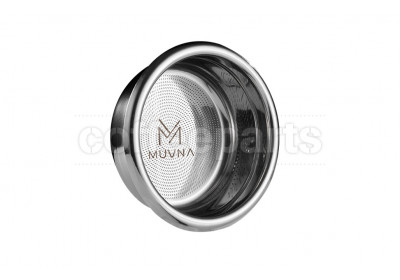
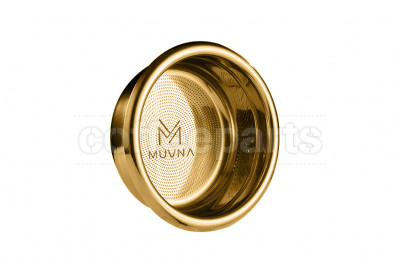
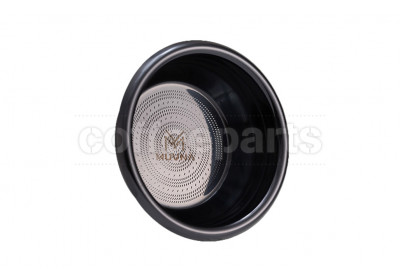
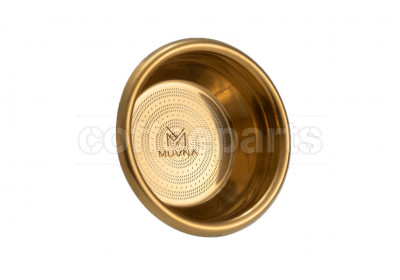
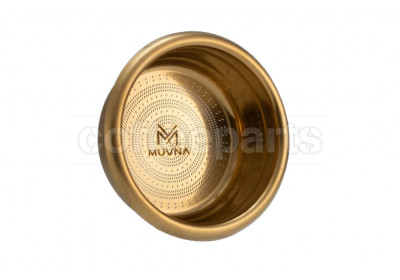
- Muvna: the Nika 22g in 58.5mm stainless and the Morbius 20g in titanium black, both laser-cut with dual-layer filtration.
Ridged or ridgeless?
A ridge clips the basket into the portafilter spring; ridgeless baskets slide out freely, which many people prefer for swapping sizes and for cleaning. Neither changes extraction. Whichever you pick, match your tamper to the basket's internal diameter, and if you want to see channelling for yourself, a bottomless portafilter shows exactly what the new basket is doing.
The MHW-3Bomber baskets on this page come from the brand that was Gold Sponsor of the 2025 World Barista Championship in Milan. Coffee Parts is MHW-3Bomber's exclusive distributor for Australia, so the BEP Butterfly and JusBean filters you see here are the same catalogue that stood behind that competition stage, stocked and supported locally.
What to pair with a new basket
A better basket shows you what the rest of your puck prep is doing, so it pays to finish the job. A WDT tool breaks up clumps before you tamp, which is where most channelling starts. A coffee scale under the cup is the only way to hit the same 1:2 ratio twice. A puck screen keeps the shower screen cleaner between backflushes, and a blind filter is what you backflush with. None of this is an upsell; it is the order we would set up a bench in ourselves.
My dad started Coffee Parts in 1999 because he could not find a part for his Faema E61, and baskets have been on our shelves ever since. For years they were an afterthought: you used whatever came with the machine. Then precision filters arrived and we watched customers stop blaming their grinders. I still think the basket is the cheapest way to learn what your espresso is actually doing. Buy the size that matches your dose, tamp with a fitted tamper, and pay attention to the pour. The rest follows.
— Pedro Lara
Frequently Asked Questions
What is a portafilter basket and what does it do?
+
It is the removable perforated filter that sits inside the portafilter handle and holds the ground coffee during extraction. Hot water is pushed through the coffee bed under pressure and exits through the holes in the base. The number, shape and consistency of those holes affect how evenly the puck extracts and how much fine sediment ends up in the cup, which is why the basket matters more than its size suggests.
What makes VST precision filters different?
+
VST filters are made to deliver consistent extraction over a wide range of concentration with reduced sediment, and each one is warranted for zero defects. They are designed to brew properly as a Normale, Ristretto or Lungo within a narrow gram capacity, so you buy the 15g, 18g, 20g or 22g filter that matches your dose. In his book Espresso Extraction, Scott Rao recommends VST because of their precise, imaging-verified holes.
Do IMS baskets make a difference?
+
The IMS Competition B70 filters here are built for consistent extraction and rich crema in 58mm groups, in 7/9g single, 16/20g and 18/22g double capacities. Whether you taste the difference depends on where you are starting. If your grinder is uneven or your dose changes daily, fix those first. If those are dialled in, a precision filter removes one more variable and makes the shot more repeatable across groups.
How do I choose a size for my dose?
+
Weigh the dose you normally use, then buy the basket labelled for it. Singles typically run 7g to 14g, doubles 14g to 21g and triples above 21g. A precision filter performs best within a narrow band, so an 18g filter suits doses close to 18g rather than 21g. Working at a 1:2 ratio, that 18g dose yields about 36g of espresso, which is a good starting recipe to adjust from.
Is my Breville portafilter 54mm or 58mm?
+
Measure it rather than guess: lift out the basket and measure its internal diameter with a ruler or calipers. The filter baskets on this page are made for 58mm portafilters (with some 57mm and 53mm sizes), so a 54mm portafilter will not accept them. For model-matched Breville gear, use our Breville accessories pages instead, and bring the measurement with you when you ask us for help.
What does ridgeless mean, and does it matter?
+
A ridged basket has a lip around its outside that clips into the retaining spring in the portafilter, so it stays put when you knock out the puck. A ridgeless basket has no lip and slides out freely, which makes swapping between sizes and cleaning easier. The ridge has no effect on extraction, so choose by workflow. VST, Pullman and MHW-3Bomber all offer ridgeless options in this range.
When should I replace a worn or cracked filter?
+
Replace it as soon as you see a crack, a warped rim that no longer seats flat, or holes that stay blocked after a proper clean and backflush. A damaged filter leaks pressure around the edge and channels through the puck, and no amount of grind adjustment fixes that. Our standard 21g and 7g replacement filters list the machine brands they fit, so match the brand before ordering.






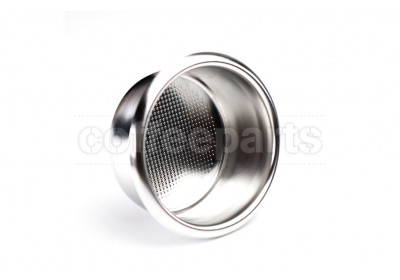


![Pesado HE[%] High Extraction Basket: Medium](https://www.coffeeparts.com.au/media/catalog/product/cache/1/small_image/400x280/62defc7f46f3fbfc8afcd112227d1181/a/-/a-pesado-he-basket.jpg)
![Pesado HE[%] High Extraction Basket Breville 54mm](https://www.coffeeparts.com.au/media/catalog/product/cache/1/small_image/400x280/62defc7f46f3fbfc8afcd112227d1181/a/-/a-pesado-he-basket-breville-54.jpg)