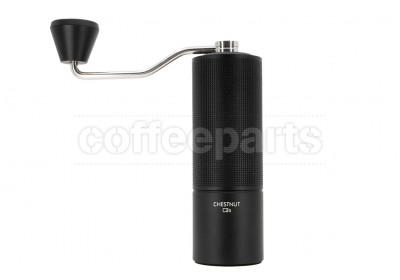
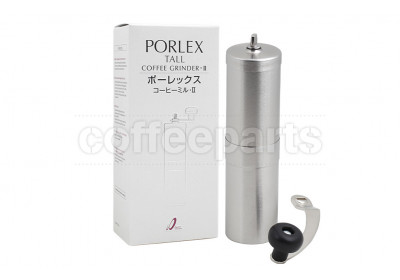
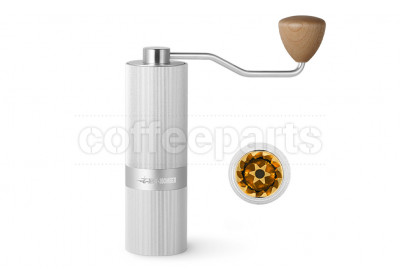
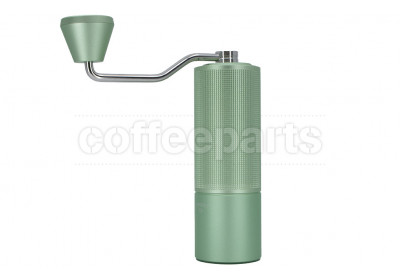
Fresh grounds anywhere the kettle goes: your brew bar, unplugged
Hand coffee grinders for pour over, AeroPress, French press and the road, chosen and tested since 1999
TL;DR: A manual coffee grinder crushes beans between hand-cranked burrs, no power needed. Models like the Timemore C5 Pro and Comandante C40 MK4 give pour over brewers consistent grounds anywhere.
A manual coffee grinder is the natural partner for anyone who brews without a machine. No cord, no motor, no noise before the house wakes up. Just burrs, a crank and the coffee you actually want to drink. This page is the brew bar view: coarser settings for pour over, French press and cold brew, travel-sized bodies that pack next to an AeroPress, and the burr quality that makes a hand crank worth turning.
Why the hand coffee grinder earned its place on the brew bar
Filter coffee lives or dies on particle distribution. Scott Rao, in The Professional Barista's Handbook, puts sharp burrs ahead of every other grinder feature because they produce fewer fines and a tighter spread of particle sizes. That matters more at pour over settings than it does for espresso: a coarse grind with a tail of dust drains unevenly, over-extracts the dust and under-extracts the rest.
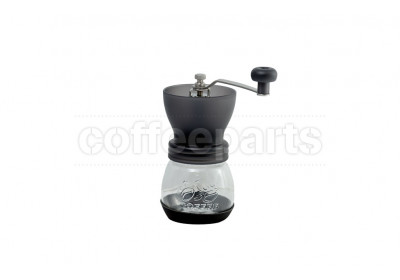
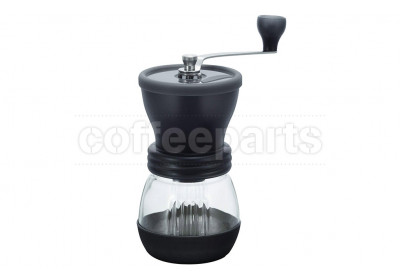
Jessica Easto's Craft Coffee: A Manual makes the practical point that any burr grinder, even a modest one, beats no burr grinder, and that the distribution of particles, not the mere presence of fines, is what unsettles extraction. We see the same thing in the cups we brew at Pagewood. The Tiamo Glass hand grinder with its ceramic conical burrs gives a clean, drinkable V60. The Comandante C40 MK4, made in Germany with the Nitro Blade burr set, gives a noticeably sweeter and clearer one from the same beans. Both are honest tools. The difference is in how tight the grounds are.
What changes as you move up the range
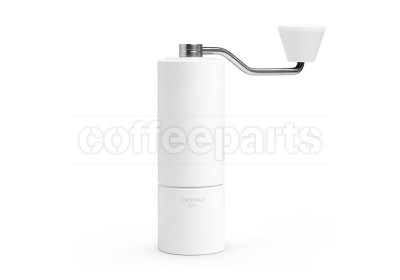
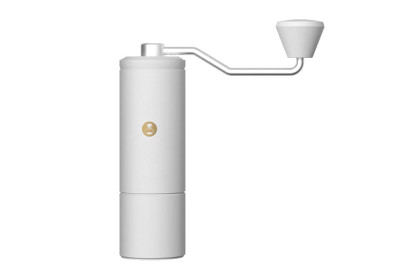
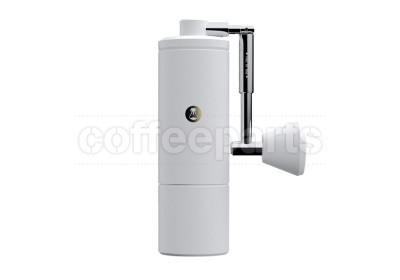
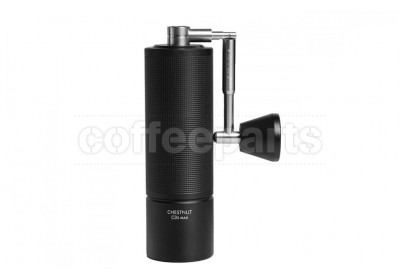
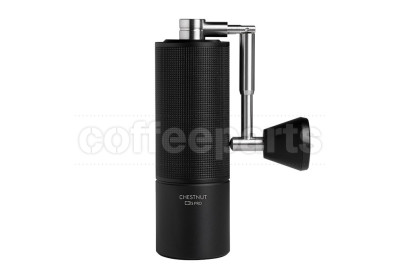
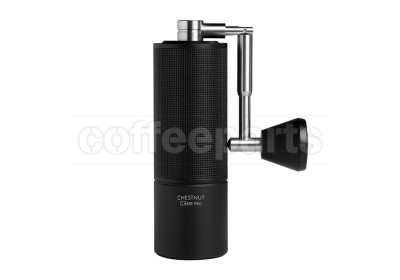
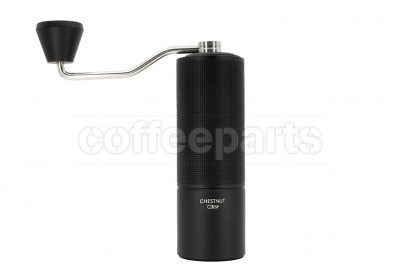
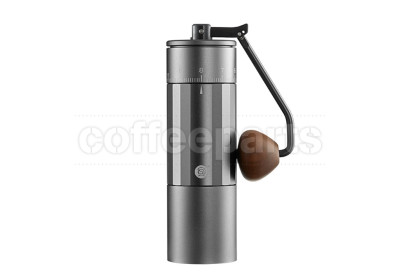
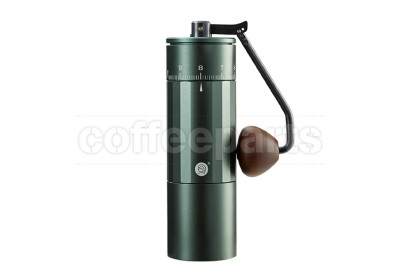
Burr size and alignment are the first thing. The Timemore C5 Pro fits a 42 mm S2C-042-III seven-blade burr inside a 53 mm body, which is why a compact handheld coffee grinder can now hold its own on a proper brew bar. Adjustment feel comes next: the Millab x Timemore M01 uses an external ring modelled on a camera lens, so returning to your pour over setting after a French press batch is repeatable. Then the details that only show up on a Saturday morning: the Etzinger etz-I's retractable crank and magnetic lid, or the Kanso Hiku's CNC-machined aluminium body that shrugs off a backpack.
James Hoffmann, in How to Make the Best Coffee at Home, notes that a well-built hand grinder can match electric grinders sitting far higher up the price ladder. The trade is effort. Coarse filter grinds are quick work; that trade favours the manual brewer more than anyone.
How to choose a manual coffee grinder for filter brewing
Searches for the best manual coffee grinder usually come down to four questions. Answer them in order and the shortlist writes itself.
1. Where will you brew?
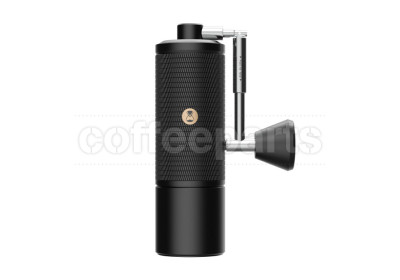
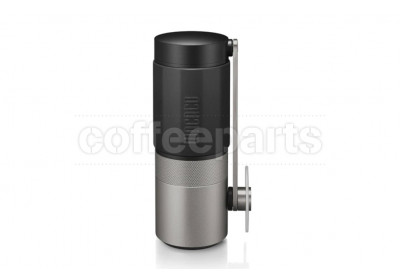
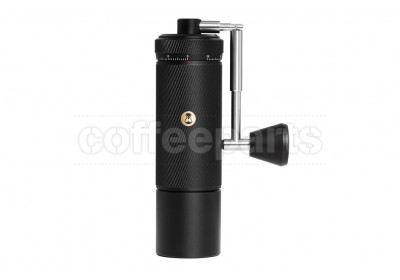
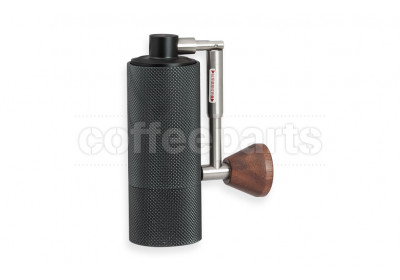
A grinder that never leaves the kitchen can be taller and heavier, which usually means a bigger burr and more coffee per fill. The Timemore C5 Pro and the Comandante C40 MK4 sit comfortably in this camp. A grinder that travels needs to earn its space. The Wacaco Exagrind stands 14.3 cm tall and takes 20 grams, enough for a pour over or an AeroPress, and disappears into a side pocket. The Timemore C5 ESP PRO folds its handle flat for the same reason. If a camping coffee kit is the goal, weight and a fold-away crank matter more than a fifth of a step of adjustment.
2. Which brew methods, and how coarse?
Every grinder here covers pour over, AeroPress and plunger. Pour over sits in the medium range: gritty, like beach sand. French press and cold brew go coarser. Moka sits fine-to-medium. The point is not the labels; it is how repeatably the grinder returns to each one. Stepped grinders with a click per setting, which is how most models on this page work, make that easy to log and repeat. Pietro goes a step further with two burr geometries: a multipurpose set for espresso through filter, and a dedicated brewing set tuned for filter extraction. If you are certain you will only ever brew filter, that dedicated geometry is worth a look. If you also pull shots, our home coffee grinder range covers the espresso decision in detail.
3. Ceramic or steel burrs?
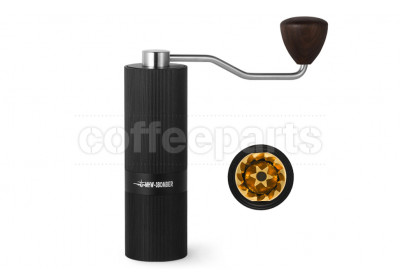
Ceramic conical burrs, as found in the Tiamo, are hard wearing, rust resistant and slower to cut. They suit an entry-level grinder for pour over and cold drip. Steel burrs cut faster and, at the top of the range, more precisely: the Comandante Nitro Blade set and the MHW-3Bomber Racing M1's 38 mm titanium-plated burr are the two clearest examples on this page. Steel is the choice once you are chasing clarity in a light roast.
4. Capacity and daily volume
One cup a day for one person: 20 to 30 grams is plenty, and a smaller body cranks faster. Brewing for two or batching a coffee server for the table: look at 40 to 50 gram hoppers such as the Tiamo's 50 gram glass body, or accept two fills. Hoffmann is candid that the daily effort is the real cost of a hand grinder, and he is right. Coarse filter grinds soften that cost considerably compared with espresso.
Who this range is not for
If you are grinding for a household of four espresso drinkers every morning, a hand crank will wear thin fast. That is an electric grinder job. Timemore's electric options and the rest of our range are on the coffee grinder pages. For everyone brewing filter, the honest steer is this: buy the best burr you can justify, keep the body size matched to where you brew, and pair it with a gooseneck kettle and a scale. The grinder sets the ceiling; the rest of the kit reaches it.
Timemore was the Top Sponsor of the 2025 World Brewers Cup in Jakarta, the world championship for manual filter brewing, and its ambassadors include Australia's 2022 World Barista Champion Anthony Douglas. Coffee Parts is Timemore's exclusive distributor in Australia, so every Timemore grinder on this page comes to you through the same channel the brand uses for its competition work.
A hand grinder is half a brew bar. After more than 25 years of watching what people come back for, this is the kit that finishes it: a gooseneck kettle for pour control, a brew scale for repeatable ratios, the right paper filters for your dripper, and an AeroPress if you travel. Keep the burrs clean: Cafetto Restore grinder cleaner, run through every few weeks, clears oil build-up and keeps the grind consistent. Find it under cleaning products. Filter brewing rewards consistency, and clean sharp burrs are where consistency starts.
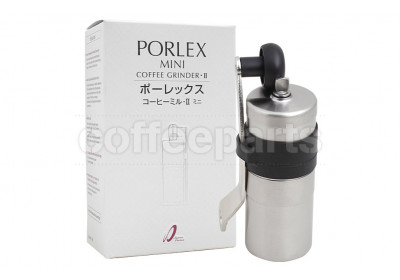
We have been putting hand grinders in customers' hands since 1999, back when a Porlex and a plunger was the whole kit. What changed is the burr. Ten years ago I would have told a pour over brewer to save for an electric grinder. Now I hand them a Timemore or a Comandante, watch them grind twenty grams in under a minute, and the cup is dialled in by the second brew. The grinder sets the ceiling. These have raised it further than any other tool on this brew bar.
— Pedro Lara
Frequently Asked Questions
Are manual coffee grinders any good?
+
Yes, provided they use burrs rather than blades. A burr hand grinder such as the Timemore C5 Pro or the Comandante C40 MK4 produces a far tighter spread of particle sizes than a blade grinder, which is what filter coffee needs to extract evenly. At the top of the range, hand grinders are chosen by serious pour over brewers on burr quality alone. The trade-off is the effort of cranking, which is modest at coarse filter settings.
Are manual coffee grinders better than electric?
+
Better is the wrong frame; they solve different problems. A hand grinder wins on portability, silence, zero power draw and, at the premium end, burr quality relative to its size. An electric grinder wins on speed and on volume, especially for espresso where fine grinding by hand is hard work. For one or two filter brews a day, a good hand grinder is often the better tool. For a busy espresso household, look at our electric grinder range.
Which grind setting should I use for pour over and French press?
+
Pour over sits in the medium range, roughly the texture of coarse beach sand. French press and cold brew go coarser still, so the grounds do not slip through the mesh or over-extract during a long steep. AeroPress works around medium-fine. Because most hand grinders on this page use clicked, stepped adjustment, note the click count for each method and you can return to it exactly next time.
Do ceramic or steel burrs matter for pour over?
+
They do, but less than burr alignment and sharpness. Ceramic conical burrs, like those in the Tiamo Glass, are hard wearing and rust resistant, and produce a clean cup at filter settings. Steel burrs cut faster and, in refined sets like the Comandante Nitro Blade or the MHW-3Bomber Racing M1's titanium-plated burr, hold a tighter distribution. If you brew light roasts and chase clarity, steel is the direction to move.
How many grams does a hand crank mill hold?
+
It varies with body size. Compact travel models such as the Wacaco Exagrind take about 20 grams, enough for a single pour over or an AeroPress. Kitchen-sized bodies like the Tiamo Glass hold up to 50 grams, which covers a two-cup pour over or a small French press without refilling. Match capacity to how many cups you make at once, not to how much coffee you drink in a week.
What should I pack for AeroPress or camping brewing?
+
A compact hand grinder with a fold-away or removable crank, the AeroPress itself with a sleeve of filters, and a way to heat water. The Timemore C5 ESP PRO and the Wacaco Exagrind are the two models on this page built around that kit, and the Zerohero Z5 X-Fold is another compact option. Grind coarse-to-medium for AeroPress and you will crank for well under a minute per cup.
How do I clean a hand mill and keep the burrs sharp?
+
Brush the burrs and chamber dry after every few uses, and run a grinder cleaner such as Cafetto Restore through it every few weeks to lift coffee oils that dull the cut. Avoid water on steel burrs. Sharp, clean burrs produce fewer fines, which is exactly what filter coffee wants, and most of the grinders on this page disassemble by hand in under a minute for a proper clean.