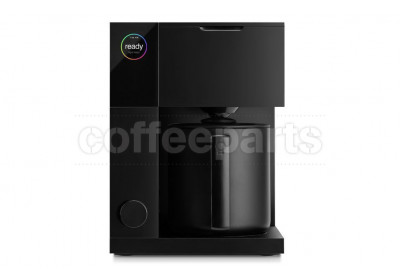
The morning you actually get out of bed for.
Home coffee gear chosen by Australia's coffee specialists since 1999.
TL;DR: Coffee at home is espresso or filter coffee brewed in your own kitchen. A Gaggia Classic E24 pulls espresso; an AeroPress Go brews filter.
Making great coffee at home is not about spending the most. It is about matching the tool to the way you drink. A flat white before the school run. A pour-over on a Sunday with nowhere to be. A shot you have dialled in until it tastes like your favourite café. We have been helping Australians build home setups since 1999, and every brewer on this page has earned its place.
Espresso at home, or everything else
Home coffee splits into two worlds, and neither is harder than the other. Espresso is pressure, temperature stability and a fine, even grind. Filter is water moving through coffee at the speed gravity allows. Both reward the same habit: weigh what goes in, taste what comes out, adjust.
The grinder does most of the work
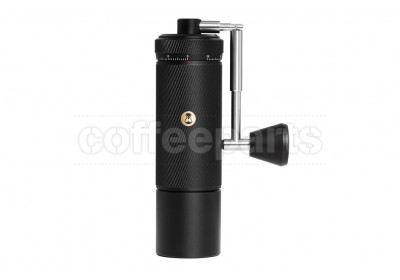
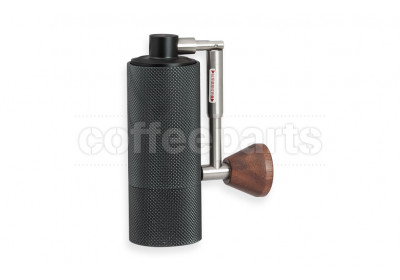
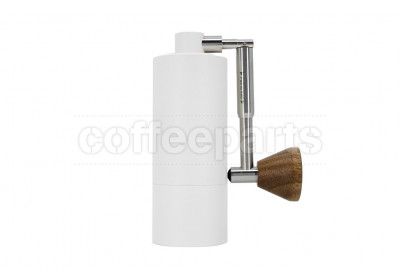
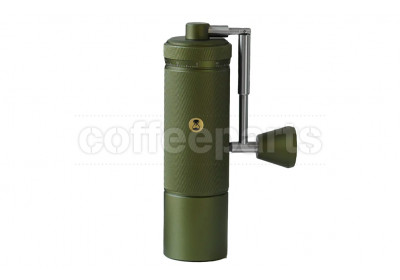
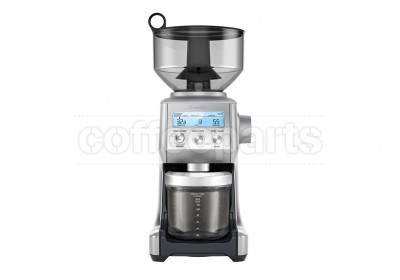
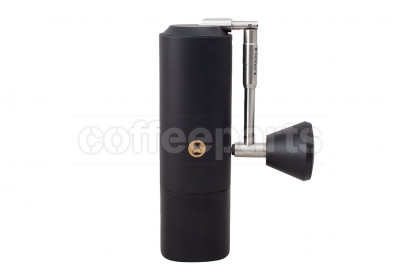
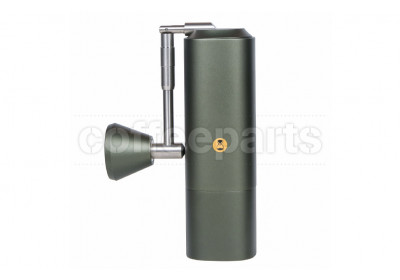
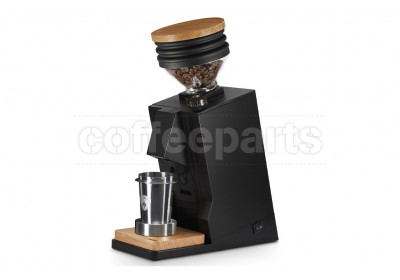
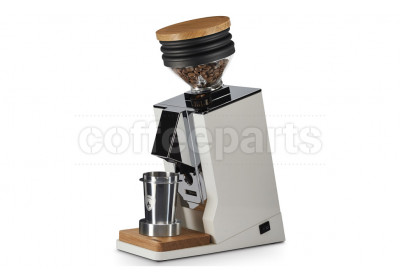
Gaggia says it plainly in the Classic manual: pump espresso machines need a finely ground coffee, and a burr grinder beats a blade grinder because blades produce uneven, dusty grounds. We agree. After years of selling, servicing and supplying parts for grinders, we know which ones still work after a decade of daily use. On this page that means the Timemore C5, C5 ESP and C5 ESP PRO hand grinders, the C5 PRO with its 42 mm S2C burr set, and the Rancilio Stile in the Silvia PRO X package. Browse the full coffee grinder range if you want an electric option.
Water, then everything else
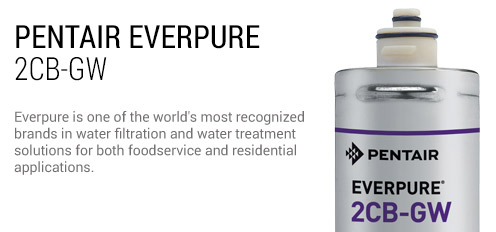
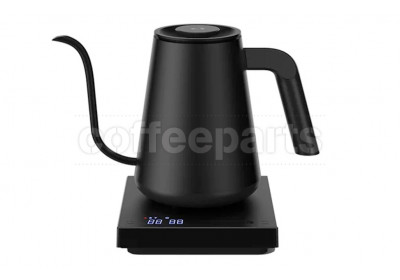
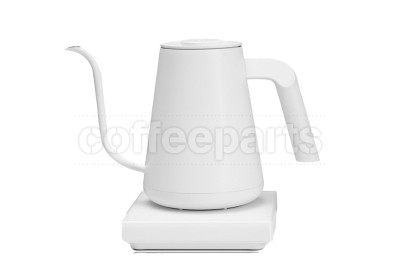
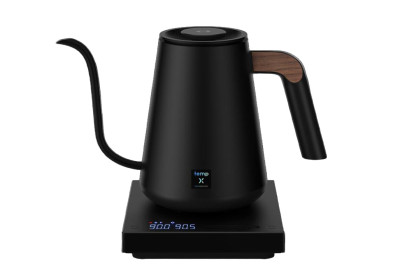
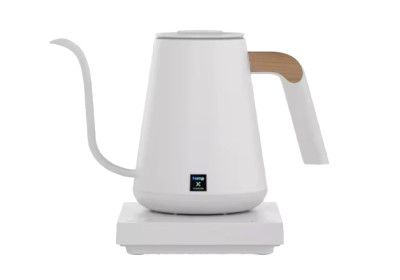
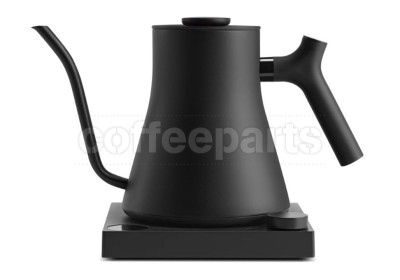
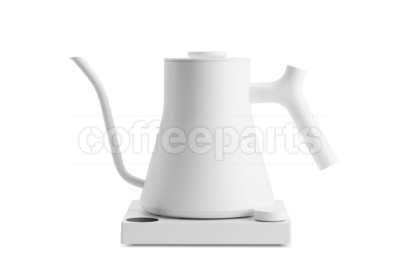
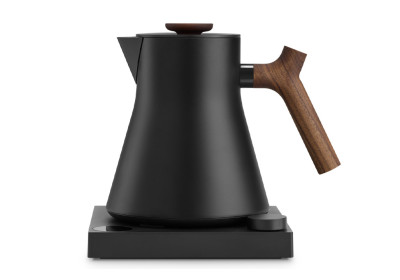
Coffee is mostly water. Hard water scales boilers and dulls every cup, and manufacturer warranties do not cover scale damage. A water filter is the cheapest protection you can buy for an espresso machine for home use. After that, a gooseneck kettle with temperature control (the Fellow Stagg EKG Pro or Timemore Fish PRO X) for filter brewers, and a scale for everyone. Every champion weighs. So should you.
How to choose your home coffee setup
Most questions come down to three things: how you drink it, how many people are drinking it, and how much bench space you have. Here is how we would answer them.
If you mostly drink milk coffee
You need steam that keeps up. The Gaggia Classic GT runs dual boilers with real-time PID control, so you brew and steam without waiting. The Rancilio Silvia PRO X and Stile package is the setup home perfectionists keep asking us about, and for good reason: it pairs a serious Rancilio machine with a matched grinder in one order. If searching for the best home coffee machine has left you with more tabs than answers, start with one of these two. See the Rancilio PRO X range and our machine and grinder packages.
If you mostly drink espresso black
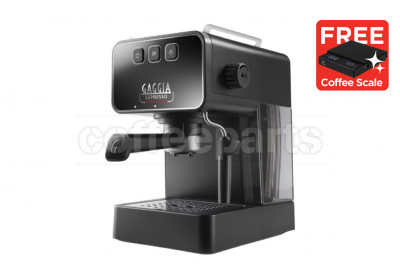
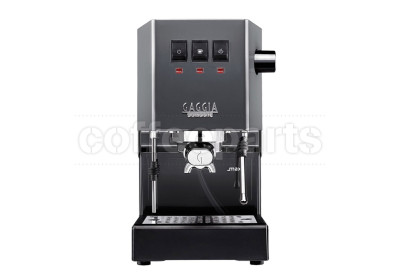
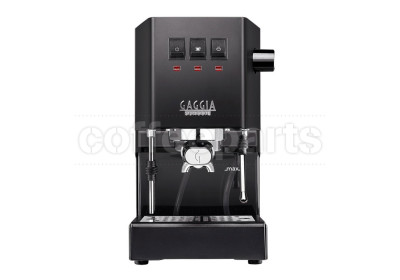
Spend less on steam and more on grind quality and temperature. The Gaggia Classic E24, with its lead-free brass boiler, is an honest entry into real espresso; put the savings into the grinder. If you want the top of the range, the Rocket Espresso R Cinquantotto (R58) brings dual boilers, PID and a rotary pump, and the Rocket Espresso Giotto FAST Type R carries the same Milan design lineage with faster heat-up. Browse the full home espresso machine range to compare coffee machines for home side by side.
If you mostly drink filter coffee
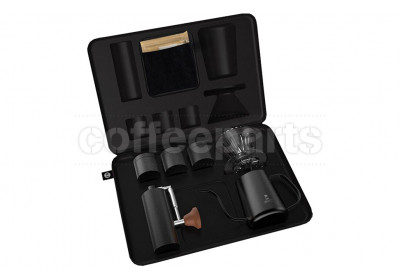
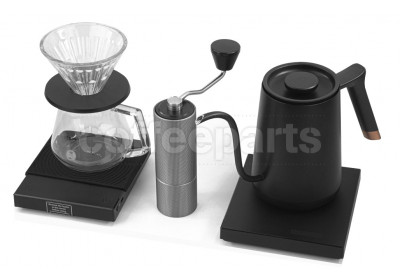
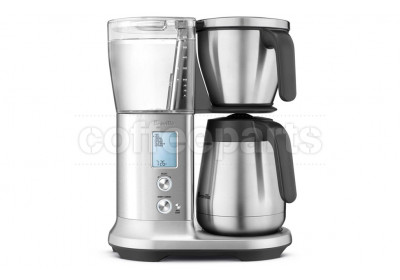
Skip the espresso machine entirely. A dripper, a temperature-controlled kettle, a hand grinder and a scale is the whole kit. The Kalita 185 Wave Set bundles dripper, filters, thin-spout kettle and server; the Kalita 101 copper dripper suits one or two cups. James Hoffmann's starting point in The World Atlas of Coffee is 60 grams of coffee per litre of water, then adjust to taste. The Timemore U French Press is the low-effort option for a bigger pot. See the pour-over range and kettles.
If you travel, camp or commute
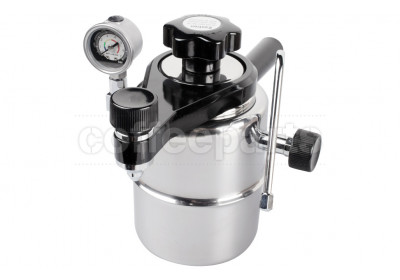
The AeroPress Go and Go Plus pack into their own mug and brew in about two minutes. The Wacaco Cuppamoka is a pour-over no bigger than a cup, with replacement papers when you run out. The Bellman CX25P makes stovetop espresso and steams milk from a camp stove. The Timemore C5 ESP PRO folds its handle for the pack. More in camping coffee and portable espresso.
Whatever you choose, add three things
- A water filter. It protects the machine and the warranty.- A scale. Guessing is not a recipe.- A cleaning kit. Minutes a week keeps a machine serviceable for years.
Fresh beans matter too. Lara's Touch, our blend with Damion Alves at BlackSmith Roasters, was built for exactly this kind of home bar.
Coffee Parts is Timemore's exclusive distributor in Australia. Timemore was Top Sponsor of the 2025 World Brewers Cup in Jakarta, and one of its brand ambassadors is Anthony Douglas, the Australian who won the 2022 World Barista Championship in Melbourne. The same brand behind his ambassador work makes the C5 grinders, Fish PRO X kettle and U French Press on this page.
Your complete home bar
A machine on its own will not make great coffee. Here is the kit that completes a home bar: a matched grinder (spend at least as much on it as on the machine), a water filter, a scale, a fitted tamper and a starter cleaning kit. For milk drinks, a CoffeeParts Classic Barista Milk Jug with a proper pouring spout. For filter, a gooseneck kettle and the right paper filters, including replacement Cuppamoka papers if you brew on the road. Framed as advice, not upsell: these are the things people tell us they wish they had bought the first time.
My dad started Coffee Parts in 1999 because he could not find a part for his 1961 Faema E61. That machine is still in the family, and it is the one Paul Bassett trained on before he won the 2003 World Barista Championship in Boston. I grew up watching people walk into our warehouse with a broken machine and leave with the part, the knowledge and the confidence to fix it. That is what coffee at home is to me. Not a luxury. A morning that belongs to you.
— Pedro Lara
Frequently Asked Questions
What equipment do I need to make coffee at home?
+
A burr grinder, recently roasted beans, a brewer, filtered water and a scale. For espresso, choose a machine like the Gaggia Classic E24 or Classic GT and add a tamper and a cleaning kit. For filter, a Kalita Wave dripper or an AeroPress Go, a gooseneck kettle and paper filters. If you have to choose where to spend, spend on the grinder before anything else; it sets the ceiling for the cup.
Is the Rancilio Silvia Pro X worth it for a household?
+
For someone making several milk drinks in a row every morning, yes. Our Silvia PRO X and Stile package pairs the machine with a matched Rancilio grinder so the whole setup is dialled in together, in black or white. It is not the right buy for someone making one black coffee a day; that person is better served by a Gaggia Classic E24 and a better grinder. Match the machine to the way you drink.
Which is better, Gaggia or Rancilio?
+
Neither is better; they answer different questions. The Gaggia Classic E24 is the honest entry point with a lead-free brass boiler and a deep parts ecosystem, and the Classic GT steps up to dual boilers and real-time PID. Rancilio's Silvia PRO X is the pick when you want a machine that will run hard every day for a household. We stock parts for both, so service is not the deciding factor.
Does an espresso machine need a water filter?
+
Yes. Manufacturer warranties do not cover scale damage, and hard water builds scale in a boiler quickly. Sydney water is workable but not ideal; many regional supplies are harder still. A cartridge filter protects the boiler and improves the taste of every cup. Talk to us about matching a filter to your water and your machine before the first shot.
Should I buy the grinder or the machine first?
+
The grinder. Gaggia's own manual says pump espresso needs a fine, even grind that blade grinders cannot deliver, and every barista we know agrees. A great grinder makes a modest machine sing; a poor grinder disappoints an expensive one. For hand grinding at espresso fineness, the Timemore C5 ESP was built for exactly that job, and the C5 PRO's larger 42 mm burr set speeds up the work.
How do I brew filter coffee with a dripper and kettle?
+
Weigh the coffee, rinse the paper, pour water just off the boil in stages and stop when the scale hits your target. James Hoffmann's World Atlas of Coffee suggests 60 grams per litre as a starting Ratio. A temperature-controlled kettle like the Fellow Stagg EKG Pro or Timemore Fish PRO X gives you a steady, controllable pour, which is most of the skill.
What works for camping and travel?
+
The Bellman CX25P is a stainless stovetop brewer that produces crema-topped coffee and steams milk from a camp stove. It is not pump espresso, but it is the nearest thing that fits in a pack. Pair it with the Timemore C5 ESP PRO, whose handle folds away, and an AeroPress Go for the days you want something lighter. The Wacaco Cuppamoka covers pour-over on the road.
How long does a home espresso setup last?
+
It depends on water quality, cleaning habits and how hard you run it, not on the badge. A machine on filtered water, backflushed regularly and serviced when seals wear can run for a very long time; one on hard water with no cleaning can need major work early. That is why we push the water filter and the cleaning kit before the second coffee, and why we keep parts for the Gaggia, Rancilio and Rocket Espresso machines on this page.