


First time here?
Not a Coffee Parts Wholesaler yet?
Want to be a Coffee Parts Wholesaler??
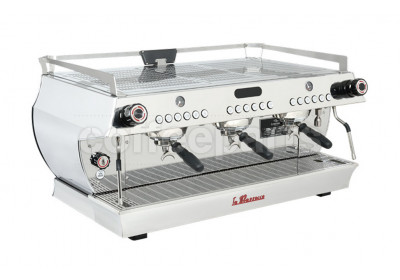
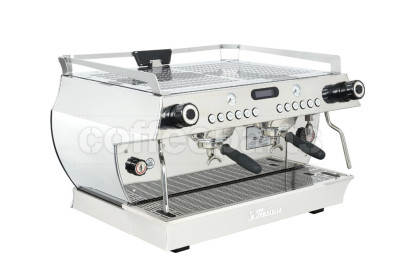
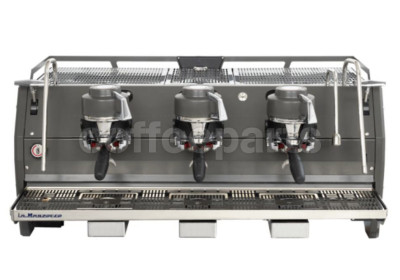
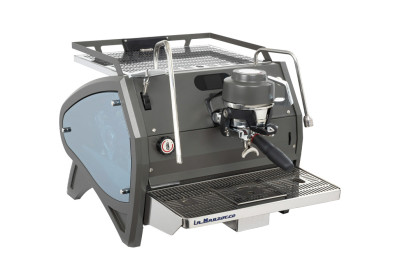
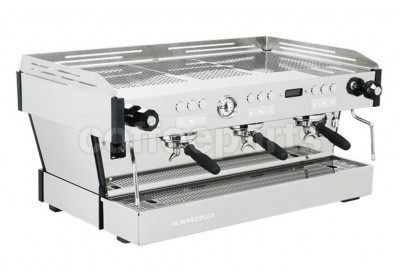
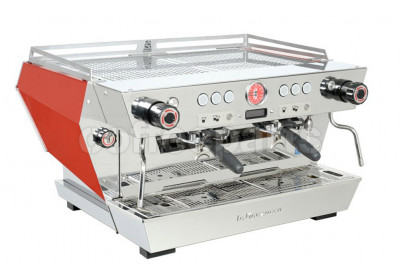
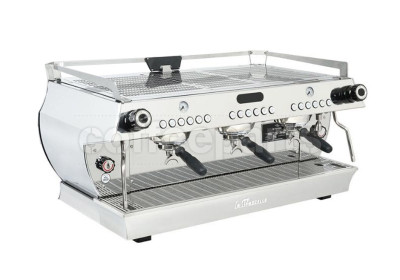
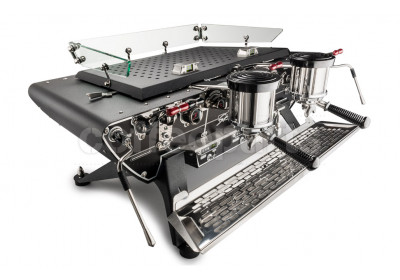
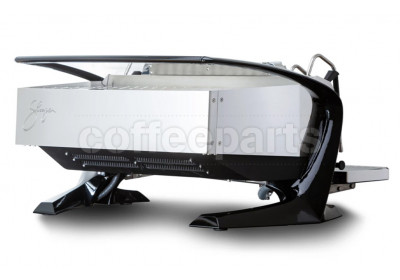
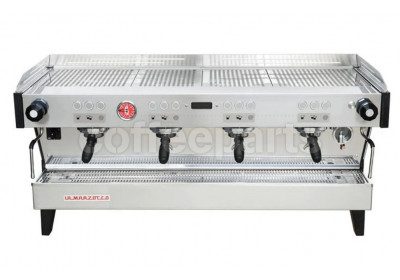
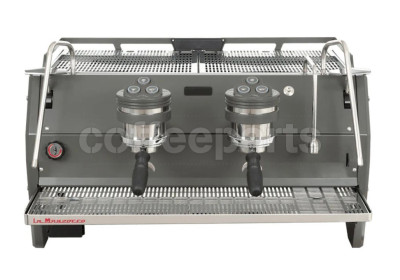
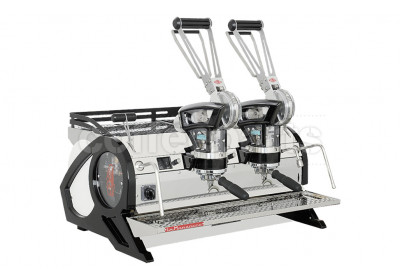
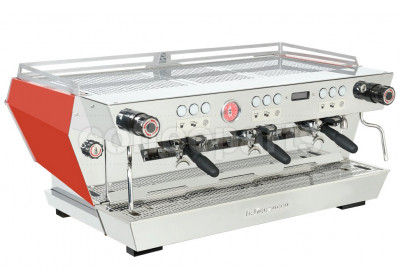
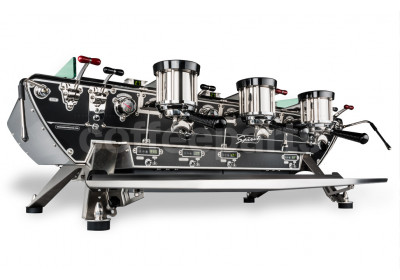
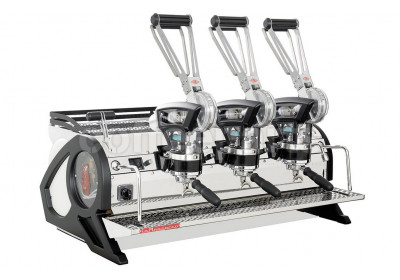
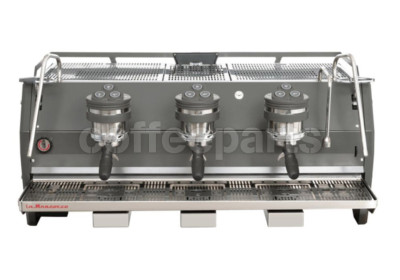
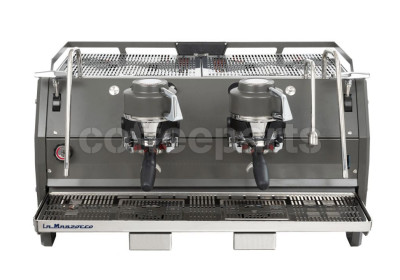
One-group to four-group commercial espresso machines from La Marzocco, Victoria Arduino, Rocket Espresso and Dalla Corte
TL;DR: Commercial coffee machines are espresso machines built for continuous café service, like the La Marzocco Linea Classic S and Rocket Espresso Boxer. Match group count to peak volume.
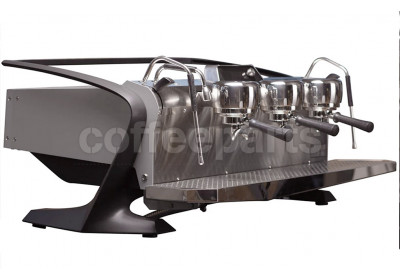
A café runs on its espresso machine. Our commercial coffee machines include the La Marzocco KB90, Linea Classic S and GB5 S, the Victoria Arduino Black Eagle Gravitech, the Rocket Espresso Boxer and the Dalla Corte EVO 2. We've been supplying, servicing and repairing espresso machines since 1999, so we can help you match a professional coffee machine to your bar, your power supply and your peak volume. Start with the buying guide below.
The biggest difference between the machines in this range is how they manage heat. The Rocket Espresso Boxer is a heat exchange machine with a rotary pump and a Sirai pressurestat, made in Milan. Rocket Espresso built it as a smaller commercial machine for businesses where bench space is tight, with oversized boiler capacity to cope with peak service. If you want to understand the type before you buy, our heat exchange machines page covers it.
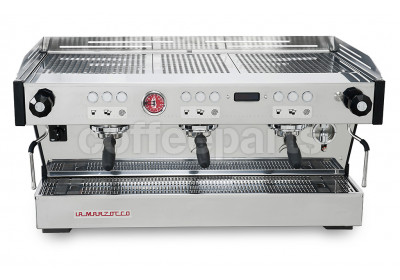
La Marzocco takes a different path. The GS3 runs dual boilers and a saturated group head, so shot temperature stays steady from the first drop to the last. The KB90 is La Marzocco's evolution of the Linea PB, reworked around barista ergonomics and workflow for very busy bars, while the Linea Classic S carries three decades of continuous refinement. The Leva X brings lever-actuated extraction and thermal stability in a low-profile body that keeps the barista facing the customer. Browse the full La Marzocco commercial range, or look at the Dalla Corte EVO 2 and ICON, the latter built by Dalla Corte for the Horeca market.
A spec only matters when it shows up in the cup and in your ticket times. That's the lens we use on every machine we recommend.
Three questions settle most decisions: how many drinks you serve at your busiest hour, what power your site can supply, and how your baristas like to work. Answer those honestly before you look at finishes.
One group: a 1 group commercial coffee machine such as the Rocket Espresso Boxer 1 Group, the La Marzocco Linea Classic S 1-group or the Leva X 1-Group suits a kiosk, a small café or a coffee machine for business use where volume is steady rather than frantic. The honest trade-off: one group head is your ceiling during a rush.
Two groups: a 2 group commercial coffee machine is the workhorse format for a busy café. The Rocket Espresso Boxer 2 Group, Dalla Corte EVO 2, La Marzocco GB5 S, KB90 and Victoria Arduino Black Eagle Gravitech all come in two-group form.
Three and four groups: a 3 group coffee machine, like the Linea Classic S, GB5 X, KB90, Leva X or Dalla Corte ICON, gives a high-volume bar more room at peak. The Linea Classic S is also available as a four-group.
Check your electrical supply before you choose. The Rocket Espresso Boxer 1 Group is listed as a 10A machine and the Boxer 2 Group with shot timer is the 25A version, so have a licensed electrician confirm your circuit first. If bench space is the constraint, the Boxer was designed as a smaller commercial machine for exactly that situation.
Workflow is the last filter. The KB90 is built around barista ergonomics in high-volume bars. The Leva X suits venues that want lever extraction to be part of the show. The La Marzocco GS3 AV and GS3 MP are home and office machines, which makes them strong coffee machines for offices that want commercial-grade espresso without a full café bar.
Most of the machines and grinders we sell are bench-tested in our Pagewood workshop before dispatch. If you're weighing two models, compare the La Marzocco group options side by side, then size the grinder and water filtration to match.
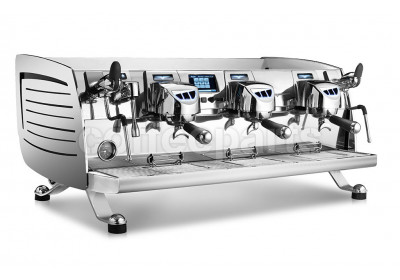
Victoria Arduino's Black Eagle carries genuine competition lineage: it served as the official espresso machine of the World Barista Championship for the 2015 to 2017 competitions. Victoria Arduino describes the Black Eagle Gravitech as the machine for the specialty barista, the person who studies and experiments every day to get a real coffee experience into the cup. In two-group and three-group form, that is exactly who it suits on this page.
A machine is one part of a working bar. Scott Rao makes the point in The Professional Barista's Handbook that no espresso machine can compensate for poor grind quality, so plan a commercial grinder alongside the machine; Coffee Parts is Ceado's Australian co-importer, with locked exclusivity. Fit a water filter before the first shot, with BWT or Everpure inline filtration and a regular cartridge cycle to protect the boiler and keep the cup consistent. Then add coffee scales to keep recipes dialled in, milk jugs sized for your menu, and Cafetto cleaning chemicals for daily group cleaning.
I'll be blunt: the espresso machine is rarely where a new café goes wrong. It's the grinder that can't keep up, the water nobody filtered, or no plan for the day a part fails. I'd rather see an owner buy a two-group Linea Classic S, fit a proper filter and put the difference into the grinder than stretch for a bigger machine and skip both. The machine that has earned its place on your bench is the one still pulling consistent shots on a wet Friday in winter, not the one with the longest spec sheet.
— Pedro Lara
All new machines sold by Coffee Parts come with a 12-month back to base parts and labour warranty. We also carry commercial spare parts for the brands in this range, which helps long after the warranty period ends.
Yes. We use both Flexirent and Silverchef for machine finance, which lets a café or business spread the cost of commercial equipment. Talk to our team about which option suits your situation.
Size for peak volume, not your average day. A one-group machine such as the Rocket Espresso Boxer 1 Group suits a kiosk or light service, two groups are the usual choice for a steady café, and three or four groups, like the La Marzocco Linea Classic S, give high-volume bars more capacity at peak.
Check before you order. The Rocket Espresso Boxer 2 Group with shot timer is the 25A version, while the Boxer 1 Group is listed at 10A. A licensed electrician should confirm your site's circuit can carry the model you choose.
Yes. The GS3 AV and GS3 MP are built for home and office use, with dual boilers and a saturated group head in a compact footprint. The AV adds programmable volumetric controls, while the MP gives the barista full manual flow profiling.
Unfiltered water leaves scale inside boilers and valves, which affects both reliability and flavour. We recommend BWT or Everpure inline filtration on commercial installs, with cartridges replaced on a regular cycle.
It can be. The La Marzocco Leva X pairs lever-actuated extraction with thermal stability and comes in one, two and three-group versions. Its low profile keeps baristas facing their customers, so it suits venues where the craft is part of the experience.