



First time here?
Not a Coffee Parts Wholesaler yet?
Want to be a Coffee Parts Wholesaler??
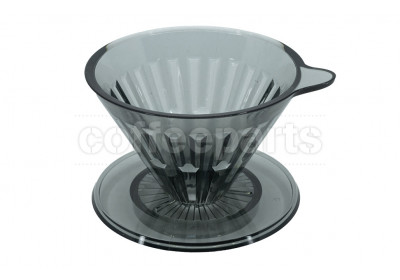
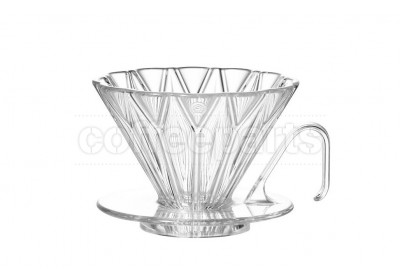
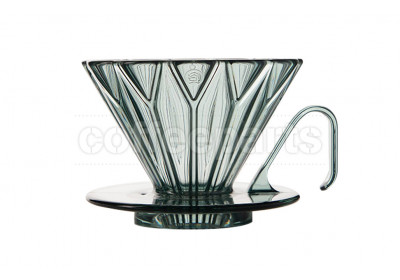





Pour-over, immersion, Moka and cold brew gear we have used ourselves, curated since 1999.
Manual brewing is making coffee by hand without an electric pump, using pour-over, immersion, stove-top or cold-brew methods. Grind size, water weight and timing control the cup.
Manual brewing is where coffee gets personal. No pump, no automation, just you, the grounds and the water deciding how the cup turns out. This range covers every hands-on method: a pour-over like the Hario V60, immersion brewers like the AeroPress and the Airflow French press, stove-top Moka pots, and cold brew systems. We've been supplying coffee equipment Australia-wide since 1999, and we stock what we'd reach for at home.
The gear is only half the cup. The other half is grind, water and timing, and that is where most home brewers go wrong before they blame the equipment.
Every method wants a different grind. A V60 pour-over runs fine-to-medium so water draws through in a few minutes; a Moka pot wants fine-to-medium too, while cold brew and a French press want coarser. If your pour-over drains too fast, the grind is probably too coarse and the cup comes out thin and sour. On the AeroPress, the plunge tells you: if the push feels too easy, the grind is too coarse; if it is very hard, it is too fine. A consistent burr grinder gives you even particles to dial in from, which a blade grinder cannot.
A brew Ratio means nothing if you are guessing. Weighing beans and water in grams is the single habit that makes pour-over and immersion repeatable. A coffee scale with a timer and flow-rate display, like the Acaia Pearl, lets you track the pour and hit the same cup twice.
Paper filters trap fines and oils for a cleaner, brighter cup; a metal mesh, like the 80-mesh filter in the Airflow French press, lets more oils through for a fuller body. Neither is wrong. After more than 25 years supplying brewers and their parts, we know the small choices, grind, filter and water just off the boil, are what separate a good cup from a flat one.
There is no single best manual coffee brewer, only the best one for how you drink coffee. Start with the cup you want, then match the method.
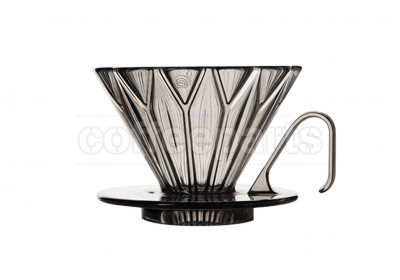
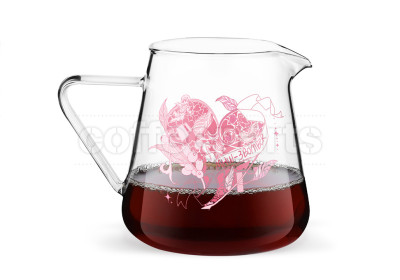
Pour-over is the manual drip coffee maker in its purest form. You control the pour, the bloom and the rate, and the paper filter gives a clean, articulate cup. The Hario V60 is the classic starting point, conical with spiral ribs for even extraction, in a smaller 01 and a larger 02 size. Pair it with a coffee server like the Kalita 300 glass server, which is made for the Kalita Wave but sits happily under a V60, and buy the right paper filters for the cone you choose. The trade-off is that pour-over rewards practice; your first few cups teach you the pour.
Immersion steeps the grounds in water, so timing matters more than technique. The AeroPress is the most versatile immersion brewer we stock: its 3-in-1 design combines the best of French press, pour-over and espresso-style brewing, and it cleans in seconds by popping out the puck. The AeroPress Go packs the same idea into a compact travel kit. A classic French press like the Airflow 400ml is the simplest immersion brewer of all: steep, plunge, pour. For a hands-off pour-over hybrid, the Ceado Hoop is an award-winning no-bypass radial infusion brewer designed to lower the barrier to entry while still letting you experiment with grind, temperature and agitation.
Cold brew steeps coarse grounds in cold water for hours, producing a smooth, low-acidity concentrate. Our cold brew range does this at home with no electricity.
A Bialetti Moka Express makes a strong, espresso-style brew on the hob. Bialetti has been making it since the early 1930s and has made more than 200 million of them, which tells you how durable the idea is. Fill the base to just below the valve, do not tamp, heat low and pull it off the heat the moment it gurgles. For espresso-style coffee with steamed milk on a stove or a campsite, the stainless Bellman CX25P adds a steamer to the same principle.
Whatever method you pick, two things lift every cup: a burr grinder for consistent particle size, and a scale for repeatable ratios. Add a storage vault to keep beans fresh between brews. The brewer can only work with what you feed it. Buy the method that fits your morning, and we'll help you get it dialled in.
The AeroPress is not just a travel brewer, it is a world championship discipline. Sydney's Jibbi Little, Thai-born, a Q Grader and the 2019 Australian Latte Art Champion, won the 2022 World AeroPress Championship. The brewer on your bench is the same one competitors take to the world stage, which tells you how much range a simple immersion brewer really has.
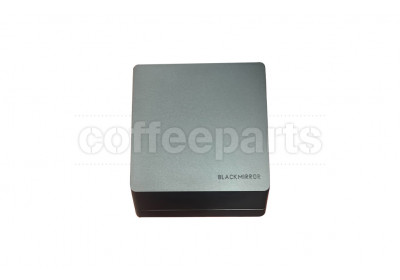
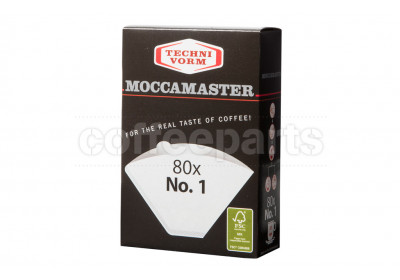
A manual brewer is the centrepiece, not the whole kit. The setup that gets you a repeatable cup is four things working together. Start with a burr grinder for even particle size, because a blade grinder undoes everything that follows. Add a coffee scale with a timer, such as the Timemore Black Mirror Basic 3 with its dedicated pour-over mode, to lock in your Ratio and track the pour. Keep beans in an Airscape vault, whose patented lid forces air out of the canister rather than sealing it in with the coffee. Finish with the right filters for your method, whether that is genuine AeroPress paper micro-filters or flat-bottomed wave papers. None of this is upsell. It is the difference between a good cup by accident and a good cup on purpose.
I came up around espresso, but manual brewing is where I send people who want to actually understand coffee. There is nowhere to hide. The grind, the water, the pour, it is all you. When my dad started Coffee Parts in 1999, the whole business grew out of caring about the small mechanical details most people skip. Manual brewing is that same obsession in a cup you can make on a kitchen bench. Pick a method, brew it badly a few times, and pay attention. That is how it clicks.
— Pedro Lara
Manual brewing is making coffee by hand without an electric pump or automated machine. You control the grind, water and timing. It covers pour-over (like the Hario V60), immersion (like the AeroPress and French press), stove-top Moka pots and cold brew systems.
The AeroPress is the most forgiving starting point. It combines immersion with gentle pressure, is hard to get badly wrong, cleans in seconds and travels well. A French press is even simpler. Pour-over like the V60 gives more control but rewards a little practice with the pour.
Yes. Burrs produce an even particle size you can dial in for each method, while blade grinders chop unevenly and make the cup unpredictable. A hand grinder is a solid place to start.
Pour-over generally wants a fine-to-medium grind so the water draws through in a few minutes. If your brew drains too fast and tastes thin or sour, your grind is too coarse, so tighten it. Cold brew and French press want a coarser grind.
Paper gives a cleaner, brighter cup by trapping more oils and fines; genuine AeroPress paper micro-filters are biodegradable. A reusable metal disk lets through more oils for a fuller body and cuts waste. Neither is wrong, it depends on the cup you prefer.
Cold brew steeps coarse grounds in cold water for many hours, producing a smooth, low-acidity concentrate you dilute to taste. Iced coffee is usually brewed hot then cooled, so it keeps more of the acidity and aroma of a hot brew. Cold brew tends to be bolder and less acidic.
Only if the Moka pot is induction-compatible, which usually means a stainless steel body rather than aluminium. Classic aluminium Moka Express pots suit gas and electric hobs; on induction they need an adaptor plate or a stainless model.
Yes. Gaskets, filter plates, plungers, seals and replacement papers for stove-top pots, immersion brewers and percolators are in our brewer parts range. Parts are where Coffee Parts started, so if it is not listed, ask us.